
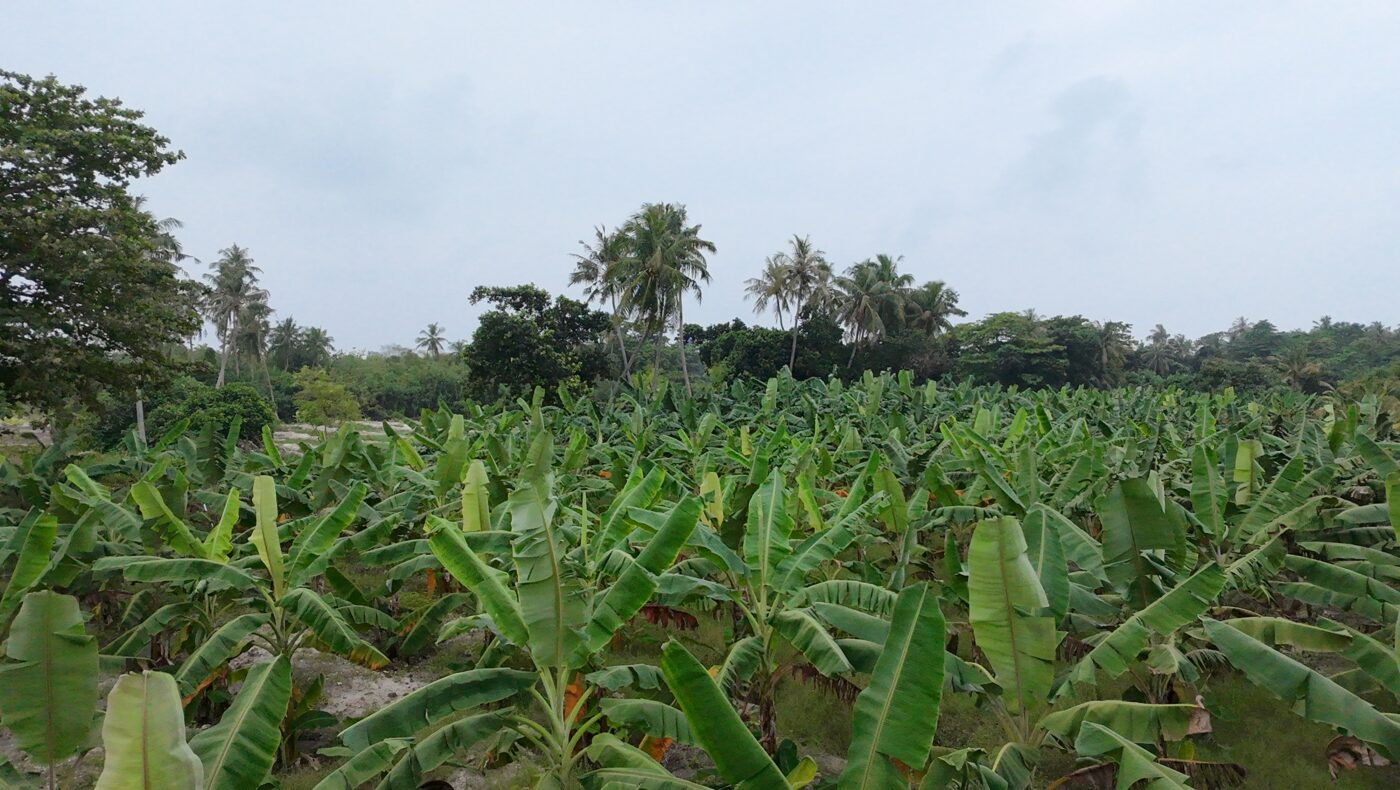
Bananas are among the crops grown in Madidhoo, where cultivation takes place under the warm, tropical conditions of the Maldives.
Across the banana field, plants at different stages of growth form part of a continuing cycle of cultivation. Like other crops grown on the island, bananas require regular attention to water, plant health and field conditions before the fruit is ready for harvest.
The plantation is one part of the wider agricultural landscape in Madidhoo, where different fruits and vegetables are grown throughout the year.
Growing Bananas in an Island Environment
The tropical climate of the Maldives provides conditions in which banana plants can grow throughout much of the year, but island agriculture also brings its own challenges.
Sandy soils, high temperatures, periods of heavy rain and exposure to wind all influence how crops are managed.
Banana plants require a consistent supply of water, particularly as they establish and develop. Irrigation therefore plays an important role during periods when rainfall is insufficient.
At the same time, drainage is important during wetter conditions, as agricultural areas must be managed according to changing weather throughout the year.
Maintaining the Banana Field
A banana plantation requires regular work long before harvesting begins.
Plants need to be monitored as they grow, while the surrounding field must be maintained to reduce competition from weeds and keep cultivation areas accessible.
New shoots also emerge around established banana plants. Managing this growth helps maintain the plantation and provides the next generation of plants as older stems complete their fruiting cycle.
This continuing process means that a banana field is constantly changing, with younger plants, mature plants and fruiting stems often growing alongside one another.
From Flower to Fruit
Banana production takes place gradually.
Once a mature plant reaches its reproductive stage, a flower emerges and develops into a bunch of bananas. The fruit then continues to grow until it reaches the appropriate stage for harvesting.
Timing matters. Bananas need to be harvested at a stage that allows them to withstand handling and transportation while continuing to ripen properly.
For produce grown on an island, harvesting decisions must also take transport arrangements into account.
From the Plantation to Market
Once harvested, bananas grown in Madidhoo become part of the same logistics chain used for other fresh produce from the island.
The fruit must be moved from the cultivation area, prepared for transport and carried by sea to customers elsewhere in the Maldives.
This connection between agriculture and marine transport is an important part of farming in Madidhoo. Produce cannot reach the market without reliable movement between islands.
For bananas and other fresh crops, coordinating harvesting and transport helps reduce unnecessary delays between the field and the customer.
Part of a Diverse Agricultural Landscape
Bananas are only one part of agricultural production in Madidhoo.
Growing a range of crops allows different areas of the island to be used for different forms of cultivation while producing fruits and vegetables with varying growing and harvesting cycles.
The banana fields also illustrate the long-term nature of agriculture. Unlike crops that are planted and harvested over relatively short periods, banana cultivation involves maintaining an established plantation and managing successive generations of plants.
It is another example of how farming in Madidhoo continues to adapt to the conditions of a Maldivian island while contributing fresh produce to the local market.